

Few things lift a coastal walk like a dark head surfacing a few metres offshore, or the sound of a hauled-out colony carrying on the wind. Britain's coastline supports internationally important numbers of seals, and much of the best watching happens from a clifftop path or a harbour wall, no boat required. But seals are also protected, easily disturbed, and at their most vulnerable during the pupping months. Here's where to go, when to go, and how to enjoy them without doing any harm.
Grey seals and harbour seals: know the difference
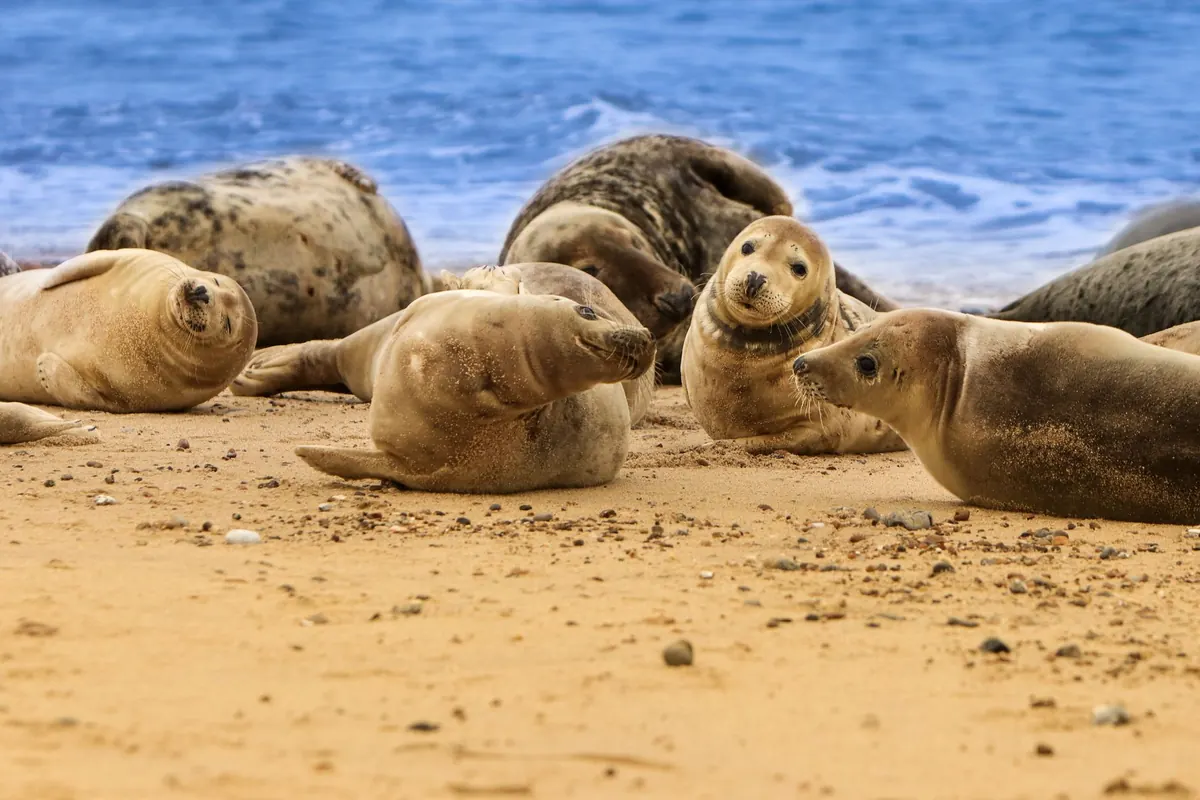
Two species breed around UK shores: the grey seal and the harbour seal, also called the common seal. The name is misleading, because greys are now far more numerous around much of our coast. Telling them apart takes practice. Grey seals have a long, sloping muzzle and nostrils that form a distinctive W shape when viewed head-on. Harbour seals have a shorter, dog-like face with nostrils that meet in a V.
In the water, look at the head: greys look heavier and flatter, harbour seals rounder and more spotted. The real difference for a visitor is timing, and it matters more than any identification quiz, because it decides whether you might be standing near newborn pups.
When to go: seasons, tides and pupping time
Grey seals give birth in autumn and winter. In the south-west it can start as early as September; on the Lincolnshire and Norfolk coasts the main pupping weeks fall around October and November, running into December. Harbour seals pupped in summer, mostly in June and July, and their young can swim within hours — a harbour seal pup has already shed its white coat before birth, while a grey seal pup stays in fluffy white fur for a few weeks, unable to swim properly.
Both species also moult, and that is when they spend the longest hours hauled out on shore: greys in spring, harbour seals in late summer. Seals are at their most sensitive then, so approach advice below matters just as much as in pupping season.
Tides shape everything. Seals rest on drying sandbanks, rocky skerries and quiet beaches, so a falling tide opens up their haul-out and a rising tide sends them back to the water. Check a local tide table, plan to arrive an hour or two either side of low water, and give the animals more room than you think you need.
Where to see seals around the UK
East Anglia and Lincolnshire
Donna Nook in Lincolnshire is the classic winter site, with a fenced viewing area that lets you watch grey seals and their pups from a safe distance. In Norfolk, Horsey Gap and Winterton-on-Sea draw big winter colonies, while Blakeney Point is best seen on a boat trip from Morston. The sandbanks of the Wash hold seals year round.
North East England and Scotland
The Farne Islands off Northumberland, reached by boat from Seahouses, are reliable for both species, and autumn brings grey seal pups. Scotland is the heartland: Orkney holds vast numbers of grey seals, the Isle of May in the Firth of Forth is a strong boat trip, and Loch Fleet in Sutherland, the Ythan estuary at Newburgh in Aberdeenshire and the Moray Firth all offer good viewing. Further west, Mull and the Treshnish Isles are excellent.
Wales and the South West
In Pembrokeshire, boat trips from St Davids and Martin's Haven take in Ramsey Island and Skomer, and the cliffs at Strumble Head are a fine spot with binoculars. Cardigan Bay and Anglesey's South Stack and Puffin Island are worth a look. In Cornwall, try Godrevy, the Land's End coast and the Helford, and Lundy off Devon has a well-known colony.
Northern Ireland and around
Strangford Lough, the Copeland Islands and Rathlin Island all hold seals, often visible from a ferry or a quiet shoreline path.
Watching without causing harm
Disturbance is the single biggest threat a well-meaning visitor can pose. A startled seal stampedes into the water, and a pup separated from its mother in the panic may not be fed again. In the UK, seals are protected and it is an offence to intentionally or recklessly disturb them. The practical rules are straightforward:
- Keep your distance. Stay at least 100 metres from hauled-out seals on foot. If a seal lifts its head to look at you, you are already close enough to bother it — back off quietly, without running.
- Never get between a seal and the sea. It is their escape route, and blocking it causes real panic.
- Keep dogs on a short lead near any shoreline where seals rest, and well away from pups.
- Use binoculars or a zoom lens rather than your feet. A good view does not require a close approach.
- On the water, book with a WiSe-accredited boat operator where possible, and if you paddle, keep well clear and never steer straight at a group.
- Never feed seals or tip fish waste and bait near a haul-out.
- Leave drones on the ground. They cause obvious distress above colonies.
- Keep quiet and avoid sudden movement along cliff paths above resting seals.
At busy sites, follow the marked routes, stay behind fences and listen to the volunteers. If you are unsure about access or a reserve's rules, check with the wildlife trust or body that manages the site before you set off.
What to do if you find a seal pup alone
Most lone pups are not orphaned. A mother will often leave her pup on the beach while she feeds at sea, returning later. Do not touch it, do not pour water on it, do not try to move it into the sea, and keep other people and dogs away. Note the location and call British Divers Marine Life Rescue, the RSPCA, or your local wildlife trust, all of whom can assess the situation properly. The same applies to an injured or entangled adult seal: report it and keep your distance rather than attempting a rescue yourself.
Planning a visit that works
Seal watching rewards a bit of preparation, and the best trips are usually the quiet ones.
- Check the tide table first, then choose a day with light wind and good visibility.
- Take binoculars, warm layers, waterproof boots and a flask. Cold, patient hours beat a rushed close-up.
- In winter pupping season, use organised viewing areas such as Donna Nook and Horsey Gap rather than trying to find your own private view.
- Book boat trips ahead in peak season and ask whether the operator follows wildlife-watching guidelines.
- Keep to footpaths, take litter home, and give seals a wide berth even when they seem relaxed.
- If the colony starts shifting, heads turning or animals sliding towards the water, you are the cause. Retreat and watch from further back.
Done well, a morning spent watching seals is one of the quiet pleasures of the British coast: a few hours of cold hands, a rising tide, and a colony going about its business as though you were never there.
Photo: Jacek / Pexels
Related posts
More stories you’ll love reading