



There is nothing complicated about a day at the beach, which is probably why so many of us get it slightly wrong. The tide table stays in the glovebox, the car ends up half on a verge outside a chip shop, and someone's picnic wrapper goes home in a gull rather than a bin bag. None of it is malice. It is the absence of a five-minute plan.
The fixes are simple and mostly free. Here are the mistakes that come up again and again on British beaches, and what to do instead.
Getting caught out by the tide
Ask anyone who works on the coast and they will say the same thing: it is rarely the cautious who get into trouble, it is the confident. At low water a beach can look enormous — miles of sand, a tempting path out to a distant spit, a shallow channel you could step across in wellies.
Then it comes back. On a big spring tide the water can move faster than you can walk over soft sand, and it rarely returns in a neat straight line. It curls in behind sandbanks, fills creeks first, and quietly cuts off the route you came down. Estuaries and wide flat bays are the places to be most careful; mud and channels there are genuinely dangerous to cross.
Check tide times before you leave the house, not when you arrive. Note the hour of high water and work backwards from it. Walking out on a falling tide and turning round well before low water is far safer than the reverse. If you cross a channel, watch how long it takes and keep glancing behind you. If you end up on a sandbank with water on both sides, do not wade through — stay put and ring the coastguard.
Parking badly, then getting stuck
Coastal car parks are small and popular, and they fill by mid-morning on a sunny Saturday. The scramble for the last space produces most of the bad behaviour you see at the seaside.
- Never block a slipway, farm gate or narrow lane. Lifeboats and fishing boats use slipways at any hour, and a blocked lane can stop a fire engine reaching a beach hut.
- Keep off the dunes and shingle banks. They are fragile, protected habitat, and soft sand swallows tyres quickly.
- Look at what you are parked on. A patch of firm-looking sand near the top of the beach may be sitting over water.
- Check the signs properly. Seasonal restrictions, permit bays and pay-and-display rules vary from one council to the next, and a ticket is a poor souvenir.
- Mark your spot. Drop a pin on your phone, or photograph the nearest sign or café front. Every beach looks identical at dusk.
The rip current you didn't notice
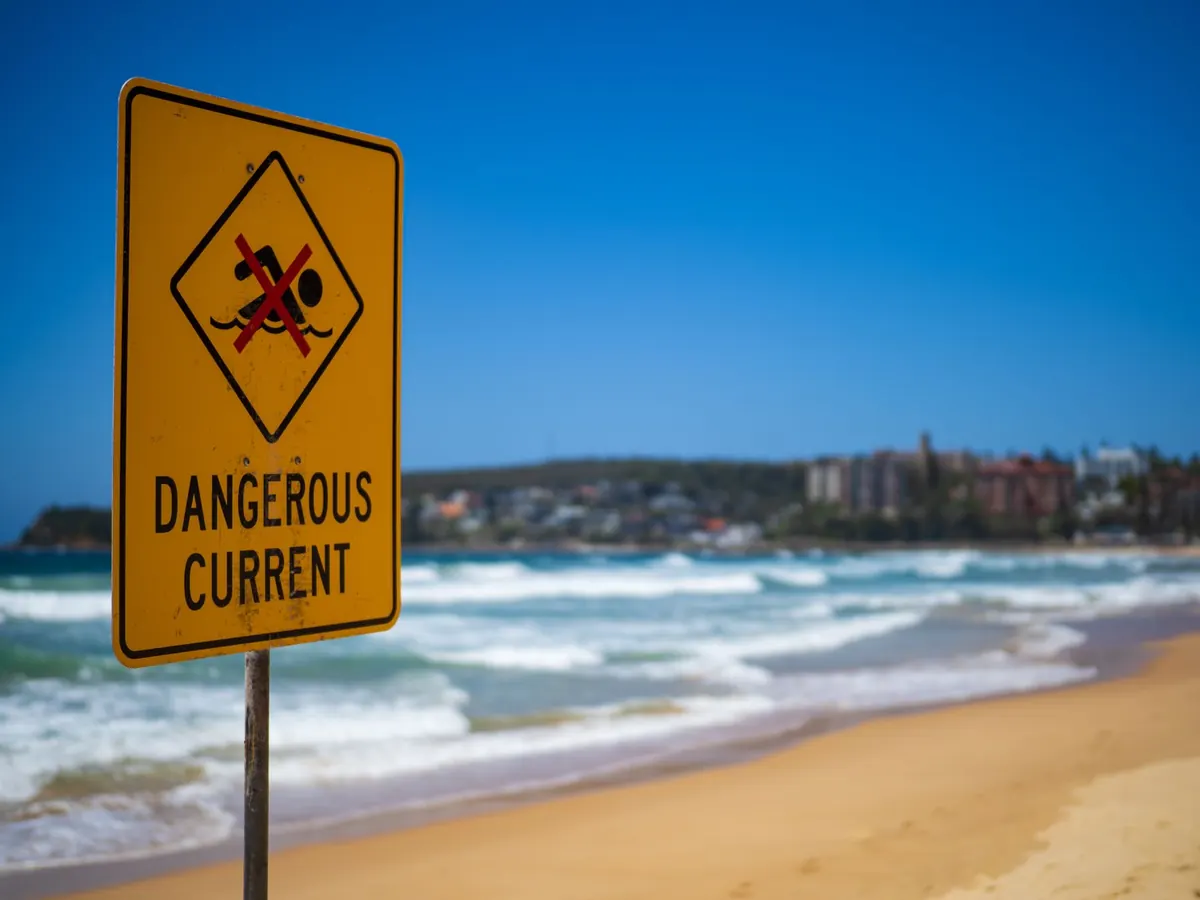
Rip currents are the reason lifeguards bother with flags. They form where water pushed up the beach by waves escapes back out to sea, often through a gap in a sandbar. From the shore a rip can look like the calmest, most inviting part of the beach: a channel of darker, flatter water with fewer breaking waves, sometimes with a little chop or debris drifting outwards.
People get into difficulty when they try to swim straight back against it. A rip will not pull you under. It pulls you out. Fighting it head-on is the wrong instinct, and it is what exhausts strong swimmers.
If you are caught in one
- Do not panic, and do not swim directly against it.
- Swim parallel to the shore until the pull eases, then head in at an angle.
- If you cannot make progress, float on your back, keep an arm up and shout for help.
- Once clear of the flow, signal to anyone watching and take your time getting back to shore.
Cold water deserves the same respect. Sea temperatures around the UK stay low even in high summer, and a sudden plunge can trigger cold water shock: gasping, a racing heart, fast breathing. Walk in slowly rather than sprinting, and give your body a moment to adjust. If you have a heart condition or another health issue that cold water might affect, speak to your GP before you swim. Children and weaker swimmers are safest between the red and yellow flags, where lifeguards can see them; on an unpatrolled beach, stay shallow and stay together.
Treating the beach as a bin
Beach bins fill fast on a hot day and overflow by mid-afternoon. On a windy evening, that is how the tide line ends up decorated with crisp packets and wet wipes. Take a bag with you, use it for everything, and carry it home even if a bin is nearby and half empty.
The items that do most harm are ordinary: plastic bags, balloon releases, fishing line, six-pack rings, wet wipes, cigarette butts. Broken glass on sand is invisible until someone's foot finds it, and a dog mess bag left hanging in a bush is no better than leaving the mess itself.
Barbecues and fires
Check local rules before you light anything. Many beaches ban disposable barbecues outright in summer, and some ban fires year-round. Where they are allowed, raise the barbecue off the sand on legs or bricks, and never bury hot coals — they stay hot under the surface and burn the feet of whoever walks over them next. Take ashes and coals away with you.
Packing for the wrong weather
A British beach day rarely matches the forecast. A brisk onshore wind can make a mild afternoon feel like early spring, and cloud does not block UV.
- Sort your feet out. Flip-flops are fine on sand and hopeless on shingle, wet rocks and around rock pools.
- Bring layers, including something windproof.
- Water and snacks, especially if the nearest shop is a long walk away.
- Sun cream, a hat and sunglasses — reapply after swimming.
- A dry bag or zip bag for phone, keys and cards.
- A little cash for parking machines and kiosks.
Ignoring the signs and other people
Read the board at the entrance. It will tell you about seasonal dog restrictions, nesting birds on shingle and dunes, no-swim zones near harbour mouths or slipways, and anything else specific to that stretch of coast. Keep dogs out of roped-off nesting areas, keep well away from seals hauled out on the sand, and leave shells, pebbles and plants where they are.
And give people room. Do not set up a windbreak against a stranger's towel, keep music to your own party, and supervise children who are digging — a collapsed sand hole is a genuine hazard to whoever is inside it and to anyone walking over it afterwards.
Before you go: a five-minute check
- What time is high water, and where will you be an hour before it?
- Is the beach lifeguarded today, and where are the flags?
- Where exactly will you park, and what is the backup plan?
- What is the wind doing, not just the temperature?
- Who is carrying the rubbish bag?
That is the whole routine. Do it once and it becomes habit, and the day out gets easier: you swim in the right place, you come home with everything you brought, and you leave the beach in a state that the next visitor will thank you for. If anything does go wrong in or near the water, call 999 and ask for the coastguard.
Photo: Seán O'Halloran / Pexels
Related posts
More stories you’ll love reading